


Decision brief for Schneider LUFV2 TeSys U motor-load function-block indicator
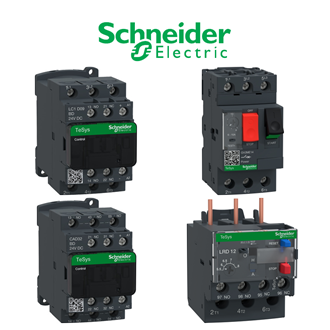
LUFV2 is the complete designation to carry through enquiry, purchase and receiving for this TeSys U motor-load function-block indicator. The main picture is a shared Schneider-category reference collage rather than an exact image of the LUFV2 unit. Use the verified facts and site-specific checks below before approving the order.
Product data confirmed from manufacturer material
| Technical item | Verified value / selection note |
|---|---|
| Complete designation | LUFV2 |
| Product identity | TeSys U motor-load function-block indicator |
| Function | Motor-load indication |
| Signal | 4 to 20 mA listing |
| Host | TeSys U LUF function block |
First decision: what task must it perform?
Identify the intended duty of LUFV2 in the existing installation and record the equipment tag. Confirm function-block host and signal scaling. A device with a similar-looking code may be a different function or a different interface; start with the actual duty rather than the category picture.
For LUFV2, compare the confirmed product identity with the bill of materials and drawings. Where the table gives only a family or component description, request the current exact-product data sheet before adopting any further voltage, current, environmental or communication claim.
Second decision: what does it connect to?
Document the host equipment, mating part, terminals, mounting dimensions and required accessories for LUFV2. Review supply and signal wiring as applicable. A replacement of LUFV2 should be accepted only after a written cross-reference covers all affected interfaces.
The shared image cannot establish a connector, rating, enclosure or revision for LUFV2. Use the actual nameplate and manufacturer drawing. For a software or battery item, check entitlement or host compatibility instead of treating the electrical-device checklist as sufficient.
Third decision: what must the quotation show?
The quotation should reproduce LUFV2 exactly, state quantity and destination, and include current manufacturer documentation. Ask whether dependent cables, fuses, mounting parts, licences or service accessories are supplied. If LUFV2 is obsolete or regional, obtain a documented availability and alternative plan.
Do not order a near-looking part in place of LUFV2 merely because it is available. Compare option suffixes, ratings and approvals; obtain engineering approval where the substitute could change system performance or safety. Record the decision alongside the LUFV2 purchase request.
Fourth decision: how will it be accepted?
At receiving, compare the package and installed marking with LUFV2. Photograph the label, inspect condition and account for accessories. Record serial or revision data when present. A mismatch between delivered label and LUFV2 requires review before installation.
After installation, retain the relevant test result for LUFV2: operation, trip, signalling, communications, measurement, movement or software activation as appropriate. Keep the final configuration and equipment location in the maintenance file.
Codes that look similar
No unassigned additional LUFV-pattern code is listed under LUFV2. Another model should still be checked against its own official documentation.
Approval record
Approve LUFV2 only when its exact identity, installation interface and supplier offer agree. Keep LUFV2 on the approved order and receiving record, and document any departure from that designation before it enters service.
