


ABB ProcessMaster FEP631 Electromagnetic Flowmeter for Conductive-Liquid Process Measurement
ABB ProcessMaster FEP631 for Industrial Conductive-Liquid Flow Measurement
The ABB FEP631 configuration identified by model code FEP631Y0D10150D2T1B1D2A70C2P1ADRPDS0C0CMACRPJ6CWYK0M5MS0CR0SMANC1NFERCDSC0TCTK1TV2V0 belongs to the ProcessMaster FEP630 electromagnetic flowmeter family. It is intended for measuring the volumetric flow of electrically conductive liquids in industrial pipelines. Typical projects include water and wastewater treatment, chemical processing, mining, pulp and paper, utilities, and general process plants where stable flow information supports control, batching, monitoring, or energy and material balances.
An electromagnetic flowmeter has no moving restriction inside the measuring tube. The measurement principle is therefore attractive for conductive liquids containing solids or for applications where pressure loss and mechanical wear must be kept low. Final suitability still depends on conductivity, liner and electrode materials, process temperature, pressure rating, flange standard, hazardous-area requirements, installation conditions, and the exact options encoded in the complete order number.
Why buyers should keep the complete configuration code
FEP631 is the family designation, while the long suffix defines the supplied build. Two instruments carrying the same family name can differ in nominal diameter, process connection, lining, electrode material, housing arrangement, power supply, outputs, communication, approvals, display, verification functions, and documentation. A procurement team should compare the full code on the nameplate and order confirmation instead of treating every FEP631 as interchangeable.
ABB publishes ProcessMaster FEP630 family options covering a broad range of nominal diameters and process connections. Available communication and diagnostic functions vary by version. Confirm the selected transmitter and sensor arrangement, remote or integral installation, cable requirements, and supported protocol before connecting the meter to a PLC, DCS, historian, or asset-management system.
| Verification point | Information for this inquiry |
|---|---|
| Requested model | FEP631Y0D10150D2T1B1D2A70C2P1ADRPDS0C0CMACRPJ6CWYK0M5MS0CR0SMANC1NFERCDSC0TCTK1TV2V0 |
| Product family | ABB ProcessMaster FEP630 electromagnetic flowmeter |
| Measured medium | Electrically conductive liquid; confirm minimum conductivity and process chemistry |
| Selection checks | Pipe size, flow range, liner, electrodes, flange rating, temperature, pressure and approvals |
| System checks | Power, outputs, protocol, grounding, straight run, cable and transmitter location |
Installation conditions that influence measurement quality
The measuring tube should remain full during operation. Air pockets, partially filled pipework, poor grounding, gas bubbles, unstable conductivity, and severe flow-profile disturbance can reduce measurement confidence. The correct flow direction, upstream and downstream arrangement, earthing method, support, gasket alignment, and cable routing should be reviewed against the current ABB installation instructions. Where the process contains abrasive solids or aggressive chemicals, the selected liner and electrodes require special attention.
For commissioning, confirm the configured measuring range and engineering units, then compare the zero-flow condition with the actual process state. Review diagnostic messages before placing the loop in automatic control. If the chosen version includes verification and process diagnostics, document the baseline results so later maintenance teams can identify changes in sensor integrity, grounding, empty-pipe behavior, or process noise.
Application limits and maintenance questions
Electromagnetic technology is not suitable for non-conductive hydrocarbons, gases, or steam. Very low-conductivity liquids require confirmation against the selected sensor specification. For slurries, examine velocity, solids concentration, abrasion, settling, and electrode coating. For chemically aggressive fluids, compare the process composition and cleaning chemicals with the published liner, electrode, gasket, and grounding-ring compatibility. Vacuum conditions and rapid temperature changes can also influence liner selection.
A maintenance plan should preserve electrical and process records rather than relying only on a displayed flow value. Keep the original configuration file, verification report, parameter backup, grounding arrangement, and commissioning measurements. When a reading becomes unstable, compare process conductivity, pipe-full status, bubble content, electrode condition, cable shielding, grounding, and transmitter diagnostics before changing calibration. Routine visual inspection should check flange leakage, cable glands, enclosure seals, support, corrosion, and accidental damage. Any cleaning method must respect the liner and electrode materials.
Information to provide with a quotation request
Send the complete model code together with the quantity and clear photographs of the nameplate. Include the pipe nominal diameter, flange standard and rating, normal and maximum flow, liquid name, conductivity, density if relevant, operating and design temperature, operating and design pressure, hazardous-area classification, required output or communication protocol, power supply, and whether an integral or remote transmitter is needed. If the meter replaces an installed unit, provide the existing face-to-face dimension and wiring details.
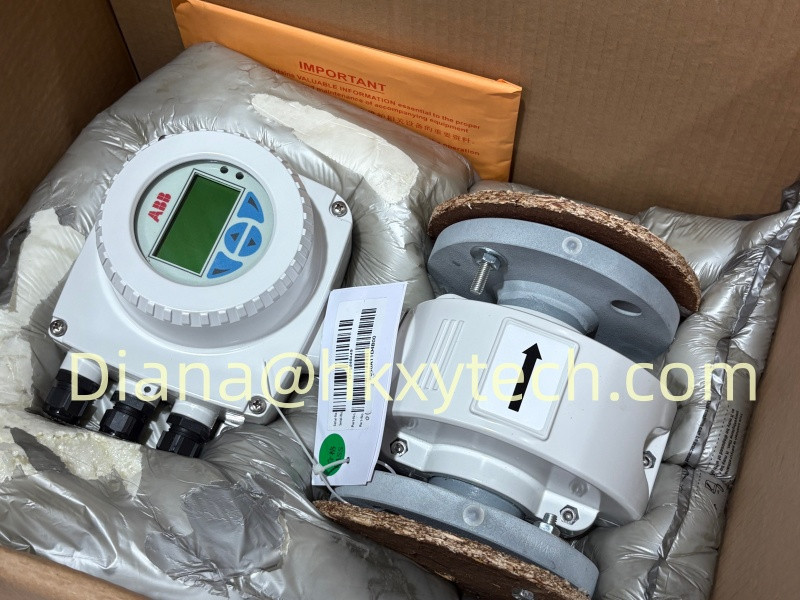
This information allows the supplier to check compatibility instead of quoting only by the FEP631 family name. The product photograph on this page is a reference image of an ABB ProcessMaster assembly. The delivered appearance and accessories can vary with the encoded options. Use the manufacturer’s current datasheet, order acknowledgement, and nameplate as the final authority for the supplied configuration.
