


Eaton MTL GECMA 22 EX Workstation Display for Hazardous Areas
The Eaton MTL GECMA 22 EX is associated with the GECMA modular workstation family for operator visualization in hazardous and demanding industrial locations. A 22-inch-class display gives process operators a practical viewing area for control screens, alarm lists, batch information, maintenance data, and production instructions. Depending on the selected workstation architecture, a GECMA installation can operate as a remote terminal, thin client, or industrial personal-computer solution.
Manufacturer information for the 22-inch GECMA workstation family identifies a 21.5-inch TFT LCD with LED backlight, 1920 × 1080 resolution, 16:9 format, 16.7 million colors, typical brightness of 250 cd/m², and a typical contrast ratio of 1000:1. A resistive five-wire touch screen may be available as an option. Exact display, communication, mounting, keyboard, pointing-device, touch, certification, and temperature specifications depend on the complete configured order.
Industrial Application Benefits
- Large full-HD display area for process graphics and detailed operator information.
- Modular workstation concept for remote-terminal, thin-client, or PC-based architectures.
- Solutions available for hazardous-area process plants and harsh industrial environments.
- Options for touch operation, keyboard, pointing device, and different data-transmission methods.
- Suitable for chemical, pharmaceutical, oil and gas, offshore, food, and batch-processing projects.
- Serviceable modular construction that supports long-term installation planning.
Configuration and Project Checks
GECMA workstation procurement requires configuration-level review. Buyers should confirm the required hazardous-area zone, gas and dust group, temperature class, ambient range, enclosure rating, display size, operator controls, communication medium, safe-area transmission equipment, power arrangement, mounting method, cable entries, and applicable ATEX, IECEx, or regional approvals. Software, operating-system, remote-access, and DCS compatibility should also be documented before ordering.
For replacement projects, compare the existing nameplate, system drawing, installed communication module, display assembly, keyboard or pointing device, and safe-area interface. A screen-size description alone does not define a complete workstation. Changes in generation, communication hardware, certification, or software environment may require engineering review rather than direct substitution.
Operator Interface and System Integration
A hazardous-area workstation is normally one part of a larger visualization architecture. The engineering team should define where the host computer or server will be located, how video and control data will be transmitted, what network segmentation is required, and how operators will authenticate to the process application. Screen resolution, remote-session protocol, graphics performance, touch calibration, keyboard layout, and pointing-device behavior should be tested with the intended HMI, SCADA, DCS, or manufacturing application before final site acceptance.
Projects should also consider the operator's working position, viewing distance, glove use, cleaning method, lighting conditions, and the need for local emergency or function keys. Mounting height and screen angle influence readability and safe operation. If the workstation is installed outdoors, offshore, or in a washdown area, the complete assembly must be reviewed for sunlight, condensation, salt, vibration, ingress protection, and temperature exposure rather than relying only on the display specification.
Commissioning, Maintenance, and Lifecycle Planning
Before energizing the equipment, verify protective grounding, cable glands, enclosure seals, supply voltage, communication links, and all hazardous-area installation requirements. Commissioning records should include the full model and serial number, installed options, software image, communication settings, certificates, and as-built drawings. A functional test should confirm display quality, touch or pointing accuracy, keyboard commands, alarm acknowledgement, remote-session recovery, and behavior after a power interruption.
For long-term support, retain backups of configuration and software, identify replaceable modules, and document the safe-area interface equipment used with the workstation. Spare-part planning is especially important when an installed system combines an older host computer with a newer display or communication module. A proposed replacement should be checked for mechanical fit, connector compatibility, certification continuity, software support, and cybersecurity requirements before any field change is approved.
Photo and Model Verification
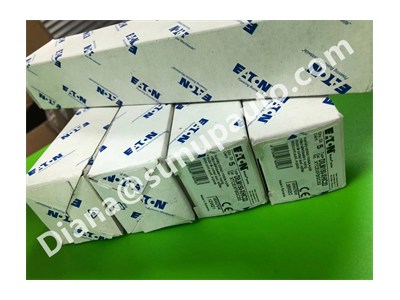
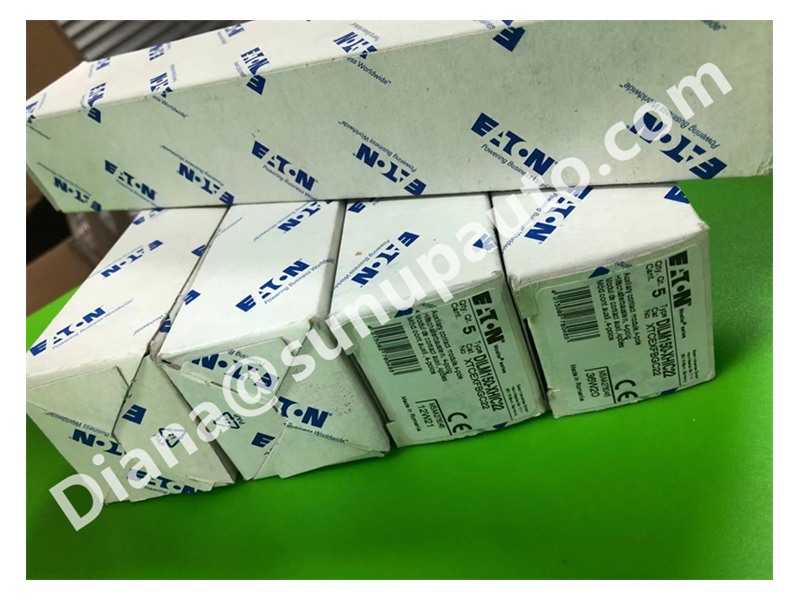
The supplied photograph shows Eaton-branded cartons for contactor accessories and does not visually confirm a GECMA 22 EX workstation. It is included only as the customer-designated Eaton reference image. The requested product must be verified by the complete GECMA configuration, equipment nameplate, display size, certification, module list, and project documentation before shipment.
For quotation, provide the full order code, required workstation type, hazardous-area classification, display and touch requirements, communication distance, cable or fiber preference, mounting arrangement, quantity, destination, and requested certificates. These details help distinguish a complete workstation from an individual display or communication component and support an accurate technical and commercial offer.
